
How do you tell if a tree is dying or dangerous?
By Andy's PGM ·
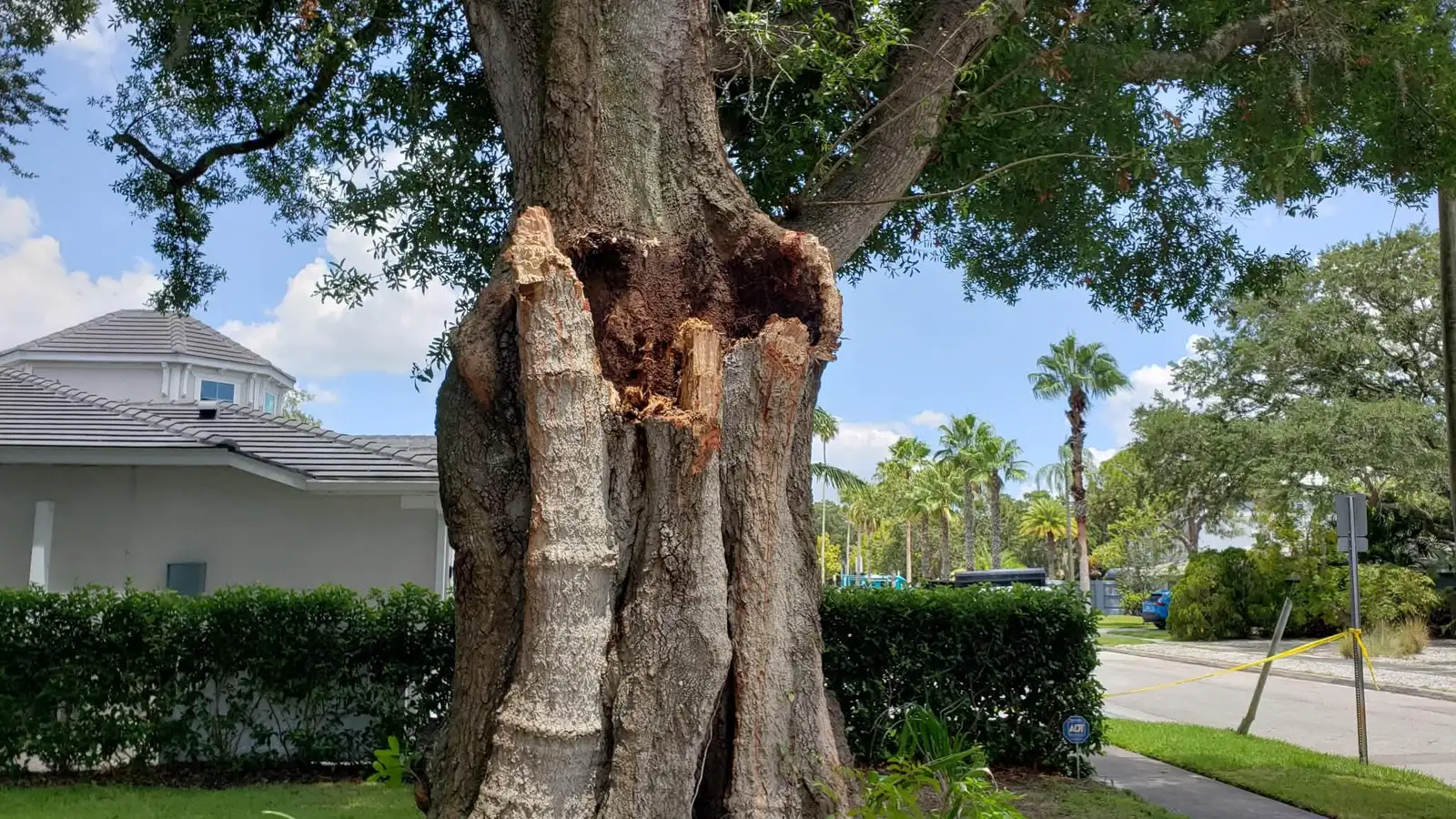
Most trees show warning signs before they fail. These are the things we check when we look at a tree, and most of them you can check yourself from the ground.
1. Dead wood up top
Look up into the canopy. Branches with no leaves in the growing season, bark peeling off in sheets, or limbs that snap off in a light wind are dead wood. A few dead branches don’t mean the whole tree is done. But dead limbs over the roof, the driveway or the patio need to come out before they come down on their own.
2. Rot at the base
This one’s easy to miss because it’s down low. Look at where the trunk meets the ground:
- Bark falling away and soft, crumbly wood underneath
- Mushrooms or fungus growing on the trunk or the roots
- A cavity or hollow you can see into
The photo at the top of this post is a trunk that rotted hollow from the inside. From across the street the tree looked fine. Up close, there wasn’t much holding it up.
3. Cracks and splits
A crack running down the trunk, or a split where two big limbs meet, is a weak point. Trees with two trunks of the same size growing in a tight “V” are prone to splitting, especially in high wind. When one does let go, it often takes half the tree with it.
4. A new lean
Plenty of trees grow with a lean and stand that way for decades. What matters is change. If a tree is leaning more than it used to, or the soil on the far side of the roots is cracking or heaving up, the roots may be letting go. Call someone the same day.
5. Damage from the last storm
After a storm, look for hanging limbs, torn bark where a branch ripped off, and limbs that are split but still attached. Those “hangers” can drop days later with no warning. See what to do when a storm damages a tree.
What to do if you see these signs
Some of these problems can be fixed with a good trim. Some mean the tree needs to come down. The only way to know is to have someone look at it.
If you’d like us to take a look, call 941-504-8190, or send us a photo through the estimate form, and we’ll tell you straight what the tree needs.

